
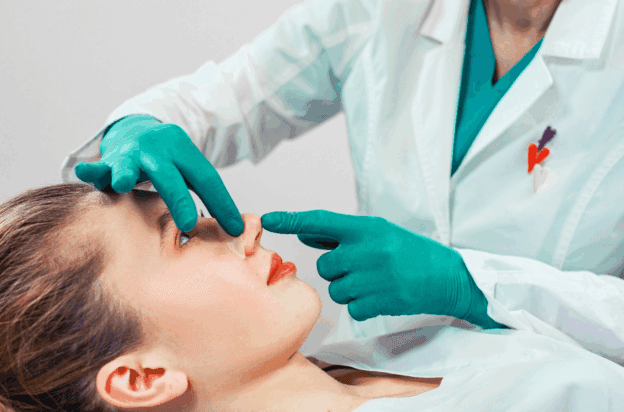
Rhinoplasty Overview
Rhinoplasty is primarily a cosmetic surgical procedure designed to reshape and refine the nose, enhancing facial balance and aesthetic appeal. By carefully modifying the nasal cartilage, bone, or both, a skilled surgeon can create a more proportionate and harmonious nose tailored to the patient’s unique features.
While some patients undergo rhinoplasty to correct structural concerns or injury-related deformities, the procedure is most commonly sought for cosmetic enhancement—whether to reduce a dorsal hump, refine the nasal tip, narrow the bridge, or improve overall symmetry. With a focus on precision and artistry, a well-executed rhinoplasty can deliver transformative yet understated results that align with the patient’s vision of beauty.
What to Expect After Rhinoplasty
Upon waking after surgery, it is common for patients to feel dazed or chilled as anesthesia wears off. Some may experience nausea during this time. Splints or packing inside the nose can create a sensation of tightness or pressure behind the eyes. Swelling typically becomes noticeable shortly after surgery, and bruising often appears under the eyes within a few hours. Most patients describe discomfort that feels more like soreness combined with pressure over the middle of the face rather than sharp pain.
The First Week After Rhinoplasty
Patients typically experience some inconvenience during the first several days of recovery. Sleeping upright may feel uncomfortable, but it significantly helps reduce swelling. Breathing through the mouth can cause dryness in the throat and lips, so keeping water nearby is recommended. Nasal breathing remains restricted until the surgeon removes any surgical packing or splints. Many patients report temporary tingling or numbness in the bridge or tip of the nose – a normal response as the nerves adjust following the procedure.
The Second Week After Rhinoplasty
By the second week, bruising around the eyes and nose usually fades from dark purple to greenish-yellow. Swelling remains but begins to subside, and the nose starts to look more natural. Patients may still feel pressure when bending over or moving around too much. Numbness or tingling around the nostrils is common until nerve endings fully heal. If packing was used, it is typically removed during a follow-up appointment within two to seven days post-surgery; patients should never attempt to remove packing themselves.
One Month After Rhinoplasty
At the four-week mark, most bruising will have cleared, and swelling will have significantly decreased, though some residual swelling may persist. Patients can usually resume most daily activities but should avoid high-impact exercises such as jogging or heavy lifting. Those who wear glasses may need to use tape or special supports to prevent pressure on the healing nose, as this can cause swelling to return.
One Year After Rhinoplasty
Patients can expect to see the final, lasting appearance of their nose about a year after the procedure. For those who underwent rhinoplasty to address breathing issues, significant improvement is typically evident by this time. Some patients also report reduced frequency or severity of allergy symptoms and chronic sinusitis following their procedure. [1]
Want to Learn More About Rhinoplasty?
While the recovery timeline requires patience, each week brings visible progress toward the final result: a nose that complements the patient’s unique features. At Coastal Facial Plastic and Reconstructive Surgery, the team is dedicated to supporting patients throughout every stage of this transformative journey. They welcome any questions about rhinoplasty and offer easy, convenient scheduling for consultations through an online form, allowing patients to request appointments at their convenience.
Clinical Study Reference:
1.Smith, T. L., et al. (2019).*Rhinoplasty outcomes on comorbid sinusitis: A5-year cohortstudy*.International Forum of Allergy & Rhinology, 9(4), 421-428.Key finding: 68% of patients with preexisting chronic sinusitis reported ≥50% symptom reductionpost-rhinoplasty (p < 0.01).